Leleiōhoku Guard
Initiative Summary
A Hawaiian Kingdom–era historic cavalry guard youth leadership program, combining leadership training with cultural education through physical training, drill, and instruction in Hawaiian military history and tradition.
This is what separates the Leleiōhoku Guard from Nā Koa o ka Mōʻī, and the distinction is worth preserving in any public description. The two formations share a period, a body of history, and a reading list — but one is mounted and one is not, and the equipment, drill, and skills follow from that. The seal makes the point without a caption: two riders, in laurel, above the banner Honor · Discipline · Service · Loyalty.
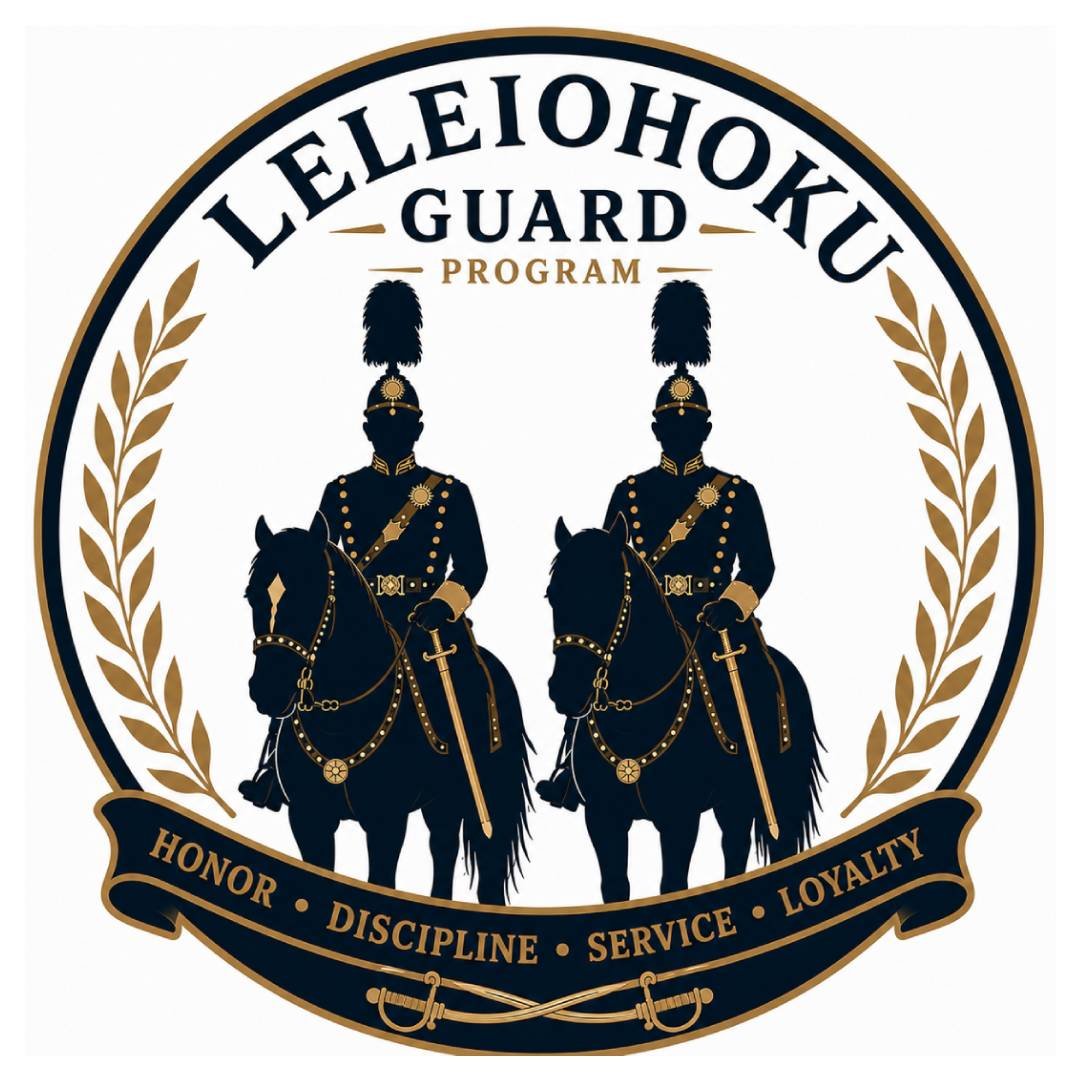
STREAMY in Leleiōhoku Guard
| Letter | As applied in this formation |
|---|---|
|
S — Sciences |
Human physiology and fitness |
|
T — Technologies |
Historical and modern cavalry equipment |
|
R — Reading, Research & Remuneration |
Kingdom-era and Kalākaua-dynasty history; study of historical battles and tactics; career pathways in military and leadership roles |
|
E — Engineering & Electronics |
Maintaining and caring for cavalry equipment; communications in training exercises |
|
A — Arts & ʻĀina |
Reenactment dress and properties; environmental stewardship |
|
M — Mathematics, Mele & Moʻomeheu |
Strategic calculation in drill and manoeuvre; traditional military music and chant; Hawaiian military tradition, including the place of the Leleiōhoku Guards in Hawaiian history |
|
Y — You |
Leadership and public speaking |
- ʻŌlelo Hawaiʻi value — Pūʻali koa: warrior, soldier.
Reading and Research
- The Hawaiian Kingdom 1874–1893: The Kalākaua Dynasty — Ralph S. Kuykendall
- Kingdom in the Sea — Peter H. Buck
- War and Society in Ancient Mesoamerica — Ross Hassig
Shared with Nā Koa o ka Mōʻī. The second attribution should be checked before either list is published: Peter H. Buck — Te Rangi Hīroa — is known for Vikings of the Sunrise and Arts and Crafts of Hawaii, and this title does not appear among his works.
The correct form is Leleiōhoku, with the kahakō on the ō. The public website has been corrected to match. The seal reads LELEIOHOKU — the letters are right, and the kahakō is omitted, which is ordinary and defensible in all-capital display lettering. No further action is needed unless the mark is redrawn, in which case the kahakō is worth carrying.